
Introduction
In real estate, the agent who answers first usually wins the deal. Yet busy agents miss a large share of calls, and roughly half of all leads come in after the office closes. An AI voice agent for real estate fixes the math: it answers every call on the first ring, qualifies the lead, and books the showing while the prospect is still interested. Here is what it does, the numbers behind it, and how to put one on your line.
The missed-call problem, in numbers
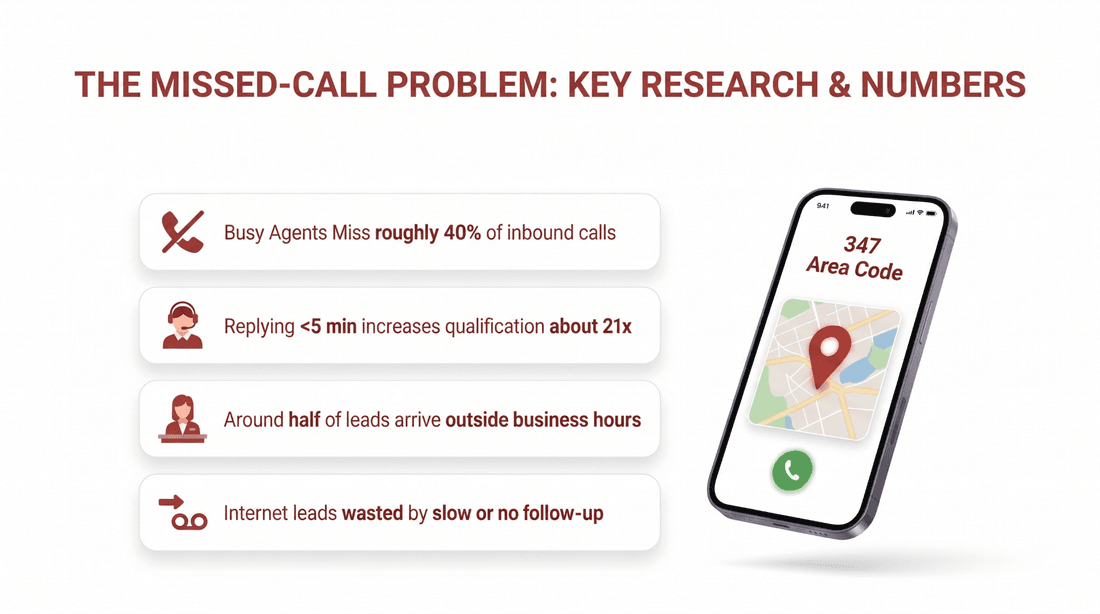
Lead loss in real estate is rarely about effort. It is about timing. The data is consistent and unforgiving:
| Signal | What the research shows |
|---|---|
| Missed calls | Busy agents miss roughly 40 percent of incoming calls |
| Speed to lead | Replying within 5 minutes makes you about 21x more likely to qualify the lead |
| After hours | Around half of leads arrive outside business hours |
| Follow-up | A majority of internet leads are wasted due to slow or no follow-up |
Put together, the picture is clear. The lead exists, the intent is real, and the deal is lost to a voicemail box. A buyer who reaches a voicemail at 9 pm simply dials the next listing.
It helps to translate the loss into dollars, because the abstraction hides the pain. Picture an agent who gets forty inbound inquiries a week and misses sixteen of them, a conservative forty percent. Say one in ten qualified calls eventually becomes a closing, and an average commission is several thousand dollars. Even a handful of missed inquiries a month carries an expected value that dwarfs the cost of answering them. This is why the missed-call problem is not a customer-service footnote for brokerages, it is a revenue line. The leads were paid for already, through portals, ads, and signage. Letting them hit voicemail is paying to generate demand and then declining to pick up the phone when it arrives.
What an AI voice agent does for agents and brokerages
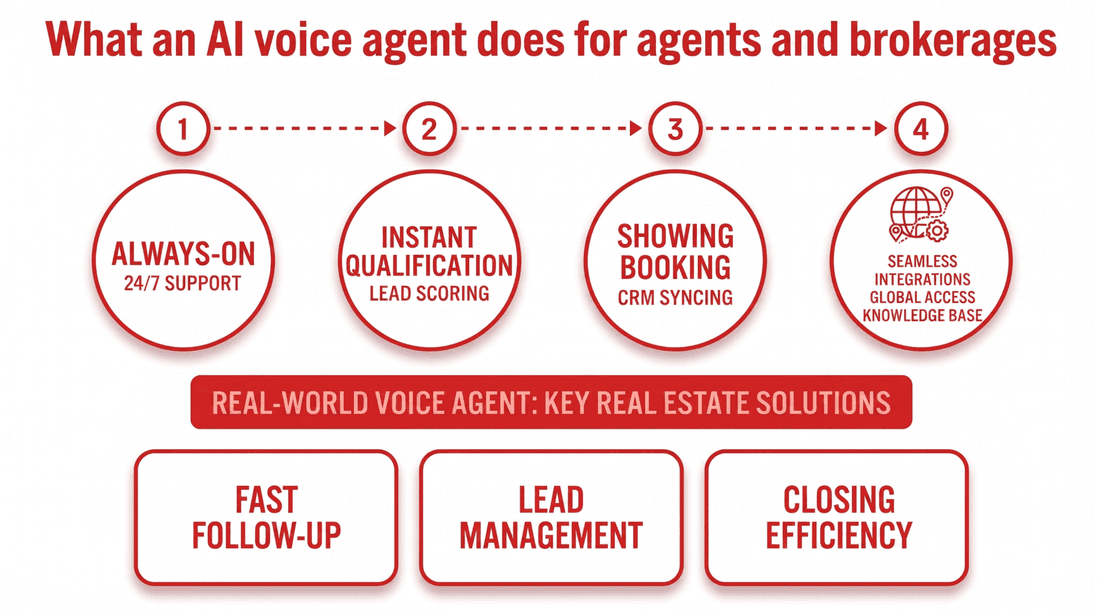
An AI voice agent acts as an always-on member of the team. It does the repetitive front-line work so human agents spend their hours on the conversations that close.
Answers instantly, 24/7
Every inbound call picked up on the first ring, including nights and weekends.
Qualifies the lead
Asks budget, timeline, financing, and property interest, then scores and routes.
Books showings
Checks your calendar and confirms a viewing slot before the caller hangs up.
Updates the CRM
Logs every detail and follow-up automatically, so nothing slips through.
It also runs outbound: lead revival on aging records, instant speed-to-lead callbacks the moment a web form is filled, and follow-up that never forgets. When a call needs a human, it warm-transfers with full context so the buyer never repeats themselves.
The outbound side is where many teams find the surprise upside. Most CRMs are full of leads that went cold simply because no one called them back in time, or at all. An agent can work that aging list patiently, reviving prospects a human team would never get to, and hand the ones who re-engage straight to an agent. On the inbound side, speed to lead is the whole game: when a buyer fills out a form on a listing, a callback within seconds, while they are still looking at the photos, converts at a wildly higher rate than one that comes the next morning. Doing that by hand across every portal and every hour is impossible for a human team. It is routine for an agent that never sleeps, never forgets a follow-up, and treats the two-hundredth call of the day with the same energy as the first.
A day in the life: the 9 pm inquiry
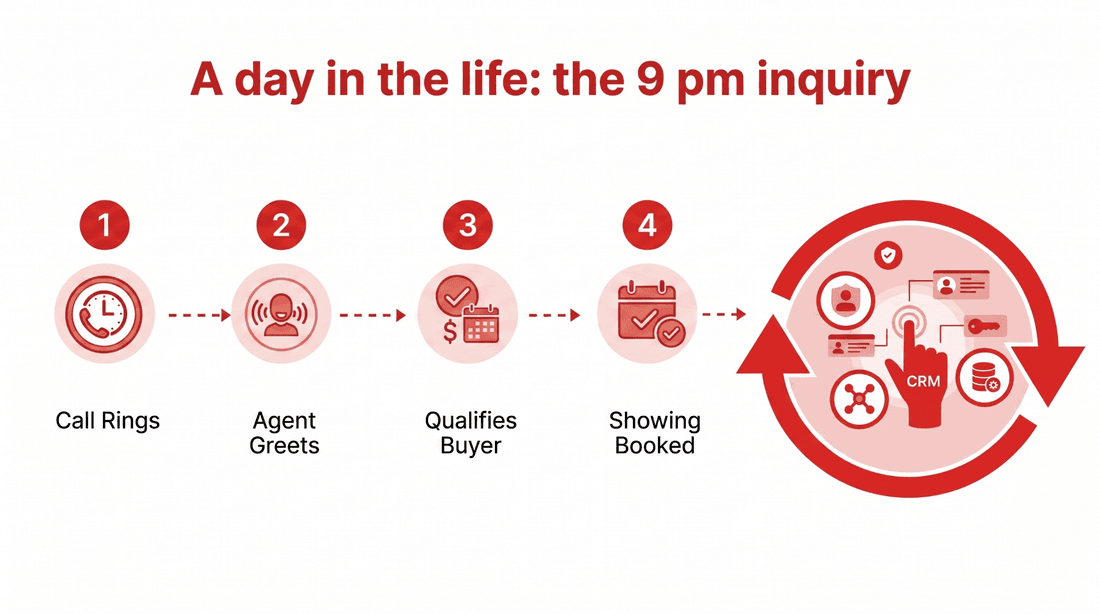
A buyer calls about a listing at 9 pm. The agent picks up on the first ring, confirms which property, asks whether they are pre-approved and when they want to tour, then offers two showing windows and books one. The CRM is updated, the human agent gets a briefed handoff in the morning, and the lead never had a reason to call anyone else. That single saved call is the whole argument: at typical conversion rates and commissions, the expected value of one captured inquiry is large, which is why missed calls quietly cost brokerages thousands a month.
Now compare that to the status quo. The same buyer calls at 9 pm, reaches voicemail, and leaves a half-hearted message, or more often leaves none and calls the next agent on the search results. By the time someone listens to the message the next morning, the buyer has already booked a showing with a competitor who answered. Nothing about the first agent's skill or listings decided that outcome; availability did. The agent who was reachable won, and the one who was asleep lost a lead they had already paid to generate. Multiply that across a year of evenings and weekends and the pattern, not any single call, is what separates a growing pipeline from a leaking one.
How to deploy one without disrupting your stack
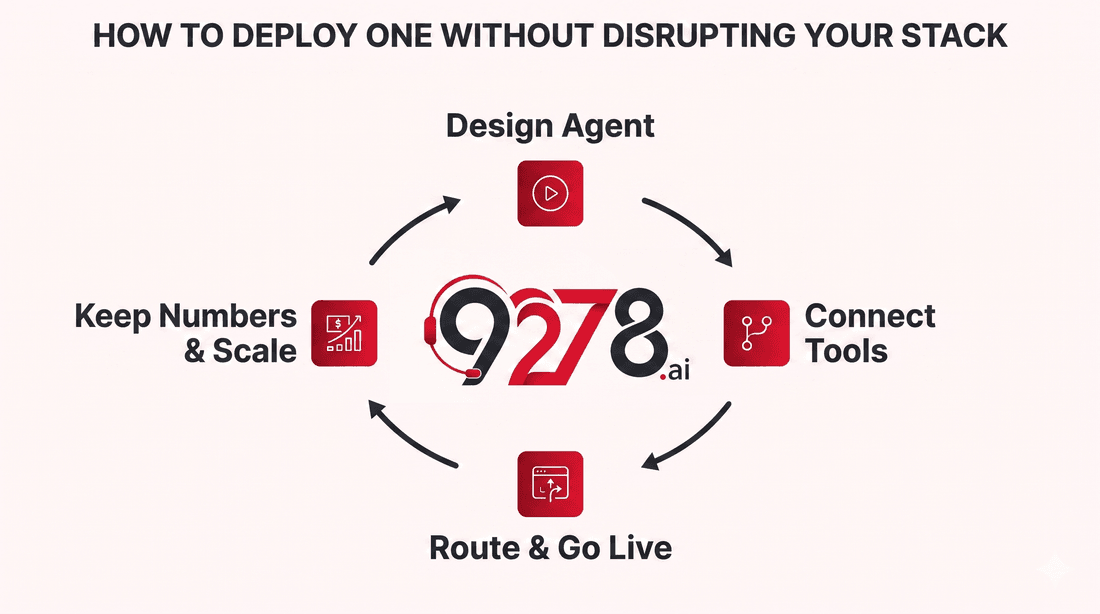
You do not need to change phone numbers or rebuild your tools. The path is short:
1. Design the agent with your scripts, qualifying questions, and guardrails. 2. Connect your listings, FAQs, calendar, and CRM. 3. Route your existing number and go live, inbound and outbound from one dashboard.
Because 9278.ai connects to the carrier you already use, your numbers and billing can stay where they are, or you can provision a dedicated number from the platform if you prefer. Pre-tuned real estate playbooks give you a running start, with scripts already shaped around qualifying buyers, booking showings, and following up. You scale from one line to a full team without per-seat math, and the agent updates your CRM and calendar as it works.
A sensible rollout starts narrow. Point the agent at your after-hours and overflow calls first, the ones currently going to voicemail, where there is no downside because those leads were already being lost. Listen to the transcripts for a week, tune the qualifying questions and the handoff rules, then widen its scope as your confidence grows. Keep a clean warm-transfer path to your best agents for the buyers who are ready to talk now, so the human touch lands exactly where it matters. As always, trial it against your real calls and validate the numbers before you roll it out brokerage-wide, because the goal is more booked showings, not just more answered calls.
Conclusion
Real estate runs on speed to lead, and missed calls quietly drain the pipeline. An AI voice agent answers every inquiry instantly, qualifies it, books the showing, and logs the lead, day or night. Start by aiming it at your after-hours and overflow calls, keep a clean handoff to your agents, and let the captured deals make the case.
Frequently asked questions
What does an AI voice agent for real estate do?
It answers buyer and seller calls instantly, qualifies the lead, answers listing questions, and books showings on your calendar. It works inbound and outbound, around the clock, so leads that arrive after hours still get a live response.
How many calls do real estate agents miss?
Industry estimates put missed calls around 40 percent for busy agents, and a large share of leads arrive after business hours. Since speed to lead drives conversion, every unanswered call is a prospect likely calling the next agent on their list.
Can an AI agent qualify real estate leads?
Yes. The agent asks about budget, timeline, financing, and the property of interest, then scores and routes the lead. Hot prospects can be warm-transferred to an agent immediately, while others are booked or added to follow-up, all logged to your CRM.
Does it work with my existing phone number and CRM?
It should. A good platform connects to the carrier you already use, so your number stays put with no porting, and integrates with your CRM and calendar through tools and function calling. The agent updates records and books slots during the call.
Is an AI cold caller for real estate legal?
Outbound AI calls are legal when you follow consent and disclosure rules. AI-generated voices count as artificial voices under the TCPA, so telemarketing calls need prior express written consent, and you must disclose at the start that the call uses AI.
Want to see it in action? Build your first agent or talk to the team.